Impact Factor ISSN: 1449-1907




Int J Med Sci 2026; 23(12):3565-3573. doi:10.7150/ijms.137550 This issue Cite
Research Paper
Percutaneous Nephrolithotomy in a Hybrid Operating Room: Clinical Outcomes, Intraoperative Cone-Beam CT Use, and Early Learning Curve from a Single-Center Experience
Ming-Ru Lee1,2, Jhen-Hao Jhan1,2, Tsz-Yi Tang1,2, Shih-Ting Huang3,4, Hsun-Shuan Wang1,2, Jung-Tsung Shen1,2, Jiun-Hung Geng1,2,4,5,6  , Yung-Chin Lee1,2
1. Department of Urology, Kaohsiung Medical University Hospital, Kaohsiung Medical University, Kaohsiung, Taiwan.
2. Department of Urology, Kaohsiung Municipal Siaogang Hospital, Kaohsiung, Taiwan.
3. Graduate Institute of Medicine, College of Medicine, Kaohsiung Medical University, Kaohsiung, Taiwan.
4. Research Center for Precision Environmental Medicine, Kaohsiung Medical University, Kaohsiung, Taiwan.
5. Department of Urology, Faculty of Post-Baccalaureate Medicine, College of Medicine, Kaohsiung Medical University, Kaohsiung, Taiwan.
6. Center for Big Data Research, Kaohsiung Medical University, Kaohsiung, Taiwan.
Received 2026-5-10; Accepted 2026-9-23; Published 2026-10-9
Abstract
Background: Hybrid operating rooms enable integration of percutaneous nephrolithotomy (PCNL), flexible endoscopy, and advanced intraoperative imaging within a single session. However, real-world evidence regarding their clinical value and workflow impact remains limited.
Methods: We retrospectively analyzed 79 consecutive stone procedures performed in a hybrid operating room. The analytic cohort included 63 PCNL-based cases involving at least one percutaneous tract. Clinical and perioperative outcomes were evaluated. Univariable and multivariable Firth penalized logistic regression analyses were performed to evaluate factors associated with residual stones and blood transfusion, including immediate intraoperative cone-beam computed tomography (CBCT) use, stone area, multiple percutaneous tracts, and, for the transfusion model, baseline hemoglobin. Procedural learning was explored by assessing the association between sequential case order and operative time using Spearman's rank correlation.
Results: The cohort was characterized by a high proportion of complex stone disease, with staghorn calculi present in 63.5% of cases and multiple percutaneous tracts required in 20.6%. Immediate intraoperative CBCT was performed in 44.4% of cases. Residual stones occurred in 14.3% of cases, and blood transfusion was required in 27.0%. In multivariable Firth regression analyses, multiple percutaneous tracts were associated with blood transfusion (adjusted odds ratio [aOR], 5.93; 95% confidence interval [CI], 1.20-34.80; P = 0.029), whereas the association with residual stones did not reach statistical significance (aOR, 4.57; 95% CI, 0.72-32.37; P = 0.107). Immediate intraoperative CBCT was not associated with residual stones (aOR, 1.14; 95% CI, 0.23-5.64; P = 0.872) or blood transfusion (aOR, 1.17; 95% CI, 0.30-4.78; P = 0.821). Operative time decreased with sequential case order (Spearman ρ = -0.348; P = 0.006), suggesting a learning-curve effect.
Conclusions: Hybrid operating room-based PCNL is feasible for the management of complex renal stones. Multiple percutaneous tracts were associated with higher odds of blood transfusion, whereas no significant associations were observed between immediate intraoperative CBCT use and residual stones or transfusion. Operative time decreased with sequential case order, suggesting a learning-curve effect. Larger prospective studies are warranted to confirm these findings and clarify the role of intraoperative CBCT in complex stone surgery.
Keywords: cone-beam CT, hybrid operating room, percutaneous nephrolithotomy, retrograde intrarenal surgery, kidney stones, transfusion, residual stone
Introduction
Percutaneous nephrolithotomy (PCNL) remains the standard treatment for large and complex renal stones, particularly in patients with high stone burden or staghorn calculi [1]. Despite continuous advancements in endourological techniques, achieving optimal stone clearance while minimizing complications remains a major clinical challenge, especially in technically demanding cases [2].
The emergence of hybrid operating rooms has introduced a new paradigm in endourological surgery. By integrating fluoroscopy, flexible endoscopy, and advanced imaging modalities such as cone-beam computed tomography (CBCT) within a single operative setting, hybrid operating rooms enable a more versatile and potentially more precise surgical workflow. In theory, this environment allows surgeons to combine antegrade and retrograde approaches seamlessly and to assess intraoperative outcomes without the need for patient transfer [3].
While the technological advantages of hybrid operating rooms are compelling, their real-world clinical value remains incompletely understood. In particular, most existing discussions have focused on the potential benefits of intraoperative imaging, such as improved detection of residual fragments or confirmation of access [4, 5]. However, in routine clinical practice, the use of advanced imaging is often not standardized and may be influenced by intraoperative judgment, case complexity, and surgeon experience [3]. As a result, the true impact of hybrid operating room implementation extends beyond imaging alone and likely involves broader factors, including procedural strategy, team coordination, and workflow efficiency [3].
Importantly, hybrid operating room-based approaches may be particularly useful in the management of complex stone disease, in which advanced intraoperative imaging and combined endourological techniques may facilitate assessment of residual fragments and procedural decision-making [3]. However, complex stone burden itself is associated with greater technical difficulty and perioperative risk,[6] making it challenging to distinguish the effects of individual components of the hybrid environment from those of underlying case complexity. Given these considerations, there is a need for real-world data that characterize early institutional experience with hybrid operating room-based PCNL, with particular attention to surgical complexity, perioperative outcomes, and workflow adaptation over time.
In this study, we report our initial single-center experience with PCNL-based stone surgery performed in a hybrid operating room. Rather than focusing solely on imaging utilization, we aimed to evaluate clinical outcomes in relation to procedural complexity and to explore the presence of a learning curve during early implementation.
Methods
Study Design and Population
This retrospective observational study was conducted in a hybrid operating room at a single teaching hospital in Taiwan. A total of 79 consecutive stone procedures performed between February 2024 and April 2025 were initially identified. To align with the study objective focusing on PCNL-based interventions, the analytic cohort was restricted to procedures involving at least one percutaneous tract (tract ≥1), resulting in 63 eligible cases. Procedures performed without percutaneous access (tract = 0) were excluded from the analytic cohort. The study protocol was approved by the Institutional Review Board of Kaohsiung Medical University Hospital (KMUHIRB-E(I)-20250385). Given the retrospective nature of the study, the requirement for written informed consent was waived by the Institutional Review Board.
Hybrid Operating Room Setting and Surgical Workflow
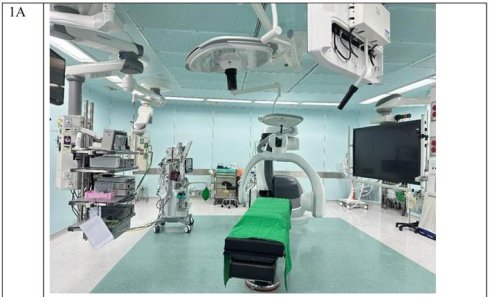
All procedures were performed in a dedicated hybrid operating room at our hospital (Figure 1). This integrated surgical environment combines a conventional operating suite with advanced imaging technologies, including high-resolution fluoroscopy and intraoperative CBCT. The hybrid operating room allows immediate three-dimensional imaging during surgery without transferring the patient, enabling real-time assessment of renal anatomy, access trajectory, and residual stone burden. This setting may be particularly useful for large or complex renal stones, in which complete stone clearance may be difficult to confirm using fluoroscopy alone.
Hybrid Operating Room Configuration for PCNL-Based Stone Surgery. Representative photographs of the hybrid operating room used for cone-beam computed tomography (CBCT)-assisted percutaneous nephrolithotomy (PCNL) and endoscopic combined intrarenal surgery (ECIRS). This integrated surgical environment combines a conventional operating suite with advanced imaging technologies, including a ceiling-mounted robotic angiographic C-arm, high-resolution fluoroscopy, and intraoperative CBCT capabilities. (A) Panoramic view of the hybrid operating room demonstrating the radiolucent operating table, robotic angiographic C-arm system, anesthesia workstation, and integrated endoscopic and imaging equipment. (B) Close-up view of the robotic C-arm and large-format display monitor used for real-time fluoroscopic guidance and intraoperative three-dimensional CBCT acquisition. This system enables immediate assessment of renal anatomy, verification of percutaneous access, and detection of residual stone fragments without transferring the patient.
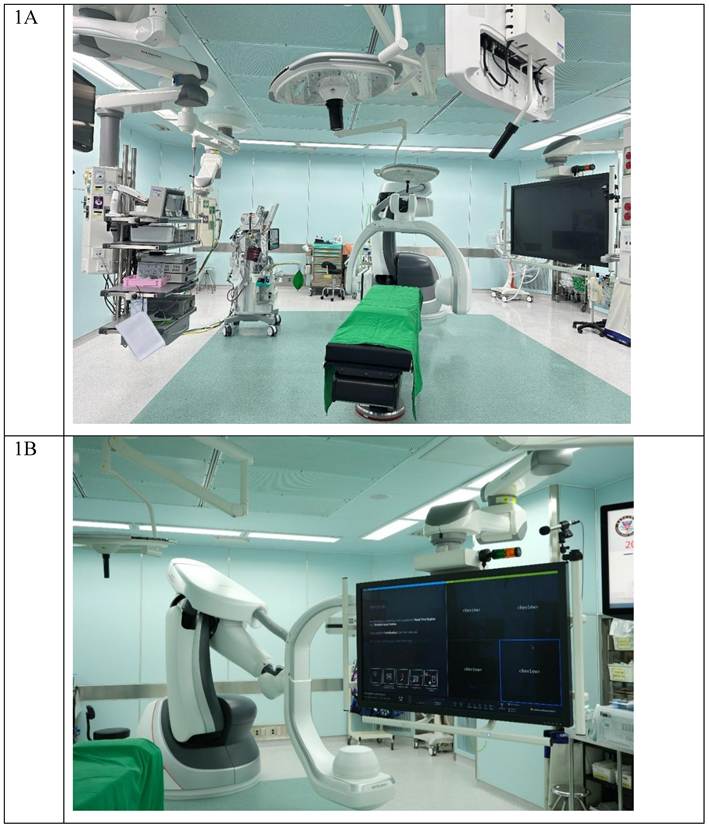
As illustrated in Figure 1, the hybrid operating room was equipped with a ceiling-mounted angiographic C-arm capable of rotational CBCT acquisition, a radiolucent operating table, and dedicated endoscopic towers. The room configuration was designed to facilitate both antegrade and retrograde approaches during endoscopic combined intrarenal surgery (ECIRS). The primary surgeon performing PCNL was positioned laterally to establish and manipulate the percutaneous tract, while a second surgeon performing retrograde intrarenal surgery (RIRS) was positioned between the patient's legs. Separate irrigation systems, laser lithotripsy equipment, and ultrasonic or pneumatic lithotripters were available simultaneously to enable efficient coordination between both approaches.
Surgical management was individualized according to stone burden, renal anatomy, and intraoperative findings. Patients underwent either PCNL alone or ECIRS, which combines percutaneous and retrograde endoscopic access to improve visualization and facilitate complete stone clearance. After induction of general anesthesia, cystoscopy and retrograde pyelography were performed, followed by ultrasound- and fluoroscopy-guided percutaneous renal access. The nephrostomy tract was then dilated, and stone fragmentation was carried out using holmium:YAG laser, ultrasonic, and/or pneumatic lithotripsy. In ECIRS cases, flexible ureteroscopy was used concurrently to inspect inaccessible calyces, relocate stones, and assist in the detection and treatment of residual fragments.
Intraoperative CBCT was not used according to a predefined protocol but was performed at the discretion of the operating surgeon based on intraoperative judgment, particularly when residual fragments were suspected, stone clearance was uncertain, or complex anatomy was encountered. When residual stones were identified on CBCT, additional nephroscopy or flexible ureteroscopy with laser lithotripsy was performed immediately to maximize stone clearance during the same procedure.
At the conclusion of surgery, a final endoscopic and/or CBCT assessment was performed as deemed appropriate. A double-J ureteral stent was routinely placed, and nephrostomy tube placement was determined according to intraoperative findings and surgeon preference. This hybrid operating room platform enabled renal access, real-time assessment of residual fragments, and immediate additional treatment when required.
Variables and Definitions
Baseline variables included age, sex, body mass index (BMI), baseline hemoglobin, laterality, and stone characteristics, including stone area, maximum stone size, and the presence of staghorn calculi. Procedural complexity was assessed using surrogate markers, including stone burden (stone area), the presence of staghorn calculi, and the number of percutaneous tracts. Multiple tracts were defined as the use of two or more percutaneous access tracts. Residual stone status and perioperative outcomes, including blood transfusion, postoperative fever, postoperative complications, operative time, and length of stay, were recorded. Residual stones were defined as residual fragments >4 mm on intraoperative or postoperative imaging. Postoperative complications were classified according to the Clavien-Dindo system. Grade II complications were reported separately, whereas major complications were defined as Clavien-Dindo grade ≥III. Regression analyses focused on factors associated with residual stones and blood transfusion [7-9].
Statistical Analysis
Continuous variables were presented as medians with interquartile ranges (IQRs), and categorical variables as counts and percentages. Univariable and multivariable Firth penalized logistic regression analyses were performed to evaluate factors associated with residual stones and blood transfusion.
Given the limited sample size and number of outcome events, Firth penalized logistic regression was used to reduce small-sample and sparse-data bias, and multivariable models were deliberately kept parsimonious. Covariates were selected based on clinical relevance rather than univariable P value thresholds or automated stepwise selection. Immediate intraoperative CBCT was included as the principal procedural factor of interest, whereas stone area and multiple percutaneous tracts were included as clinically relevant indicators of stone burden and procedural complexity. Baseline hemoglobin was additionally included in the blood transfusion model because of its direct clinical relevance to transfusion risk. Other potentially relevant or correlated variables were not simultaneously included to limit model dimensionality. Accordingly, the multivariable model for residual stones included immediate intraoperative CBCT use, stone area, and multiple percutaneous tracts, whereas the multivariable model for blood transfusion additionally included baseline hemoglobin. Odds ratios (ORs) and adjusted odds ratios (aORs) with 95% confidence intervals (CIs) were reported.
Procedural learning was explored by assessing the association between sequential case order and operative time using Spearman's rank correlation. As an additional post hoc exploratory analysis, procedures were divided chronologically at the midpoint of the 63-case cohort into the first 32 procedures (early period) and the subsequent 31 procedures (later period), and operative time was compared between the two periods using the Mann-Whitney U test. All statistical analyses were performed using R version 4.4.2 (R Foundation for Statistical Computing, Vienna, Austria). All tests were two-sided, and P < 0.05 was considered statistically significant.
Results
Baseline Characteristics and Perioperative Outcomes
A total of 79 procedures were performed in the hybrid operating room during the study period. Of these, 63 procedures involving at least one percutaneous tract were included in the analytic cohort, whereas 16 procedures without percutaneous access were excluded. Table 1 summarizes the baseline characteristics and perioperative outcomes of the cohort. The median age was 58.0 years (IQR, 46.0-67.5), and 37 cases (58.7%) were male. The median baseline hemoglobin level was 13.3 g/dL (IQR, 11.5-14.5). The cohort had a substantial burden of complex stone disease, with staghorn calculi present in 40 cases (63.5%) and multiple percutaneous tracts (≥2) required in 13 procedures (20.6%). Immediate intraoperative CBCT was performed in 28 cases (44.4%). Residual stones were detected in 9 cases (14.3%), blood transfusion was required in 17 cases (27.0%), and postoperative fever occurred in 8 cases (12.7%). Clavien-Dindo grade II complications occurred in 21 cases (33.3%), whereas major complications, defined as Clavien-Dindo grade ≥III, occurred in 1 case (1.6%). Overall, 22 cases (34.9%) experienced complications of Clavien-Dindo grade ≥II. The median operative time was 202.5 minutes (IQR, 146.2-281.2), and the median postoperative length of stay was 2.0 days (IQR, 2.0-3.8).
Baseline Characteristics and Perioperative Outcomes of the PCNL-Based Cohort (n = 63).
| Variable | Value |
|---|---|
| Demographic and Clinical Characteristics | |
| Age, years | 58.0 (46.0-67.5) |
| Male sex | 37 (58.7) |
| Body mass index, kg/m² | 25.5 (22.2-28.3) |
| Baseline hemoglobin, g/dL | 13.3 (11.5-14.5) |
| Bilateral stones | 30 (47.6) |
| Staghorn calculi | 40 (63.5) |
| Stone area, cm² | 2.6 (1.2-5.2) |
| Maximum stone diameter, mm | 21.9 (13.1-32.0) |
| Operative Characteristics | |
| Immediate intraoperative CBCT | 28 (44.4) |
| Multiple percutaneous tracts (≥2) | 13 (20.6) |
| Operative time, min | 202.5 (146.2-281.2) |
| Postoperative Outcomes | |
| Length of hospital stay, days | 4.0 (4.0-6.8) |
| Postoperative length of stay, days | 2.0 (2.0-3.8) |
| Residual stones | 9 (14.3) |
| Blood transfusion | 17 (27.0) |
| Clavien-Dindo grade II complications | 21 (33.3) |
| Major complications (Clavien-Dindo grade ≥III) | 1 (1.6) |
| Postoperative fever | 8 (12.7) |
Abbreviations: BMI, body mass index; CBCT, cone-beam computed tomography; PCNL, percutaneous nephrolithotomy. Note: Data are presented as median (interquartile range) for continuous variables and n (%) for categorical variables. Complications were classified according to the Clavien-Dindo system. Grade II complications and major complications (grade ≥III) are reported separately. Individual postoperative events, including blood transfusion and postoperative fever, are also presented separately and may overlap with the Clavien-Dindo categories; therefore, these event counts should not be summed.
Predictors of Residual Stones and Blood Transfusion
We further performed Firth penalized logistic regression analyses to evaluate factors associated with residual stones and blood transfusion (Table 2). For residual stones, larger stone area (OR, 1.24 per 1-cm² increase; 95% CI, 1.01-1.54; P = 0.044) and multiple percutaneous tracts (OR, 6.54; 95% CI, 1.55-29.56; P = 0.011) were associated with residual stones in univariable analyses. However, after mutual adjustment for intraoperative CBCT use, stone area, and multiple percutaneous tracts, neither stone area (adjusted OR [aOR], 1.08; 95% CI, 0.82-1.42; P = 0.574) nor multiple tracts (aOR, 4.57; 95% CI, 0.72-32.37; P = 0.107) remained statistically significant. Intraoperative CBCT use was also not independently associated with residual stones (aOR, 1.14; 95% CI, 0.23-5.64; P = 0.872).
Firth Penalized Logistic Regression Analyses of Factors Associated With Residual Stones and Blood Transfusion
| Outcome / Predictor | Univariable OR (95% CI) | P value | Adjusted OR (95% CI) | P value |
|---|---|---|---|---|
| Residual stones | ||||
| Immediate intraoperative CBCT | 0.99 (0.24-3.86) | 0.983 | 1.14 (0.23-5.64) | 0.872 |
| Stone area, per 1 cm² | 1.24 (1.01-1.54) | 0.044 | 1.08 (0.82-1.42) | 0.574 |
| Multiple percutaneous tracts (≥2) | 6.54 (1.55-29.56) | 0.011 | 4.57 (0.72-32.37) | 0.107 |
| Blood transfusion | ||||
| Immediate intraoperative CBCT | 1.07 (0.35-3.22) | 0.905 | 1.17 (0.30-4.78) | 0.821 |
| Stone area, per 1 cm² | 1.37 (1.13-1.75) | 0.001 | 1.15 (0.88-1.51) | 0.314 |
| Multiple percutaneous tracts (≥2) | 10.31 (2.84-43.26) | <0.001 | 5.93 (1.20-34.80) | 0.029 |
| Baseline hemoglobin, per 1 g/dL | 0.79 (0.60-1.02) | 0.071 | 0.84 (0.61-1.16) | 0.287 |
Abbreviations: CI, confidence interval; CBCT, cone-beam computed tomography; OR, odds ratio. Note: Data are presented as odds ratios (ORs) with 95% confidence intervals (CIs) derived from Firth penalized logistic regression. The multivariable model for residual stones included intraoperative CBCT use, stone area, and multiple percutaneous tracts. The multivariable model for blood transfusion included intraoperative CBCT use, stone area, multiple percutaneous tracts, and baseline hemoglobin. Covariates were selected based on clinical relevance rather than univariable P value thresholds or automated stepwise selection.
For blood transfusion, larger stone area (OR, 1.37 per 1-cm² increase; 95% CI, 1.13-1.75; P = 0.001) and multiple percutaneous tracts (OR, 10.31; 95% CI, 2.84-43.26; P < 0.001) were associated with increased odds of transfusion in univariable analyses. After mutual adjustment for intraoperative CBCT use, stone area, multiple percutaneous tracts, and baseline hemoglobin, multiple tracts remained independently associated with blood transfusion (aOR, 5.93; 95% CI, 1.20-34.80; P = 0.029), whereas stone area (aOR, 1.15; 95% CI, 0.88-1.51; P = 0.314), baseline hemoglobin (aOR, 0.84; 95% CI, 0.61-1.16; P = 0.287), and intraoperative CBCT use (aOR, 1.17; 95% CI, 0.30-4.78; P = 0.821) were not independently associated with transfusion.
Learning-Curve Analysis
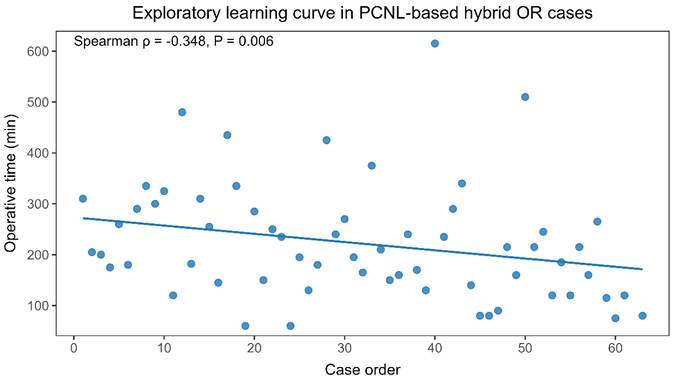
An exploratory analysis of procedural efficiency demonstrated evidence of a learning curve (Figure 2). Operative time decreased over sequential case order, with a significant inverse correlation (Spearman ρ = -0.348, P = 0.006). When the cohort was chronologically divided into an early period (first 32 procedures) and a later period (subsequent procedures), median operative time decreased from 237.5 to 165.0 minutes, although the difference did not reach statistical significance (P = 0.053). Two procedures had notably prolonged operative times exceeding 500 minutes. The 615-minute procedure involved a staghorn calculus with a stone area of 7.84 cm² and required five percutaneous tracts, whereas the 510-minute procedure involved a staghorn calculus with a stone area of 6.12 cm² and required two percutaneous tracts. Both cases required blood transfusion and had Clavien-Dindo grade II complications, with no grade ≥III complications observed.
Exploratory Learning Curve Analysis of Operative Time in PCNL-Based Procedures Performed in the Hybrid Operating Room. Scatter plot showing the relationship between sequential case order and operative time in the PCNL-based cohort. Each dot represents a procedure, and the solid line represents the fitted trend. Spearman rank correlation demonstrated a significant inverse association between sequential case order and operative time (ρ = -0.348, P = 0.006). Abbreviation: PCNL, percutaneous nephrolithotomy.
Discussion
In this early single-center experience, PCNL-based stone surgery performed in a hybrid operating room was feasible, with a residual stone rate of approximately 14% despite a high proportion of complex cases. Multiple percutaneous tracts were associated with higher odds of blood transfusion, whereas their association with residual stones was attenuated after multivariable adjustment. Immediate intraoperative CBCT use was not significantly associated with either residual stones or blood transfusion. These findings provide real-world insight into the implementation of hybrid operating room-based stone surgery and are consistent with previous studies demonstrating the potential utility of integrating endourological techniques with advanced intraoperative imaging in patients with large or anatomically complex renal calculi [3-5, 10].
A key finding of this study was the association between multiple percutaneous tracts and blood transfusion. After multivariable adjustment, procedures requiring multiple tracts had higher odds of transfusion than those performed through a single tract. This finding is clinically plausible, as multiple tracts are often required in cases with greater stone burden or more complex anatomy and may increase parenchymal injury and bleeding risk [8, 11]. Multiple tracts were also associated with residual stones in univariable analysis; however, this association did not reach statistical significance after multivariable adjustment, with a wide confidence interval consistent with the limited number of residual-stone events. Similarly, although larger stone area was associated with residual stones in univariable analysis, the association was attenuated after adjustment. These findings suggest that stone burden and procedural complexity may be relevant to surgical outcomes, but their respective contributions require further evaluation in larger cohorts.
The blood transfusion rate in our cohort was relatively high at 27.0% compared with rates reported in large PCNL series. In the international Clinical Research Office of the Endourological Society (CROES) PCNL Global Study of 5,803 patients, blood transfusion was required in 5.7% of patients, whereas a large U.S. population-based study of 225,321 PCNL procedures reported a transfusion rate of 3.3% [12, 13]. This difference likely reflects, at least in part, the substantial procedural complexity of our early hybrid operating room experience. Staghorn calculi were present in 63.5% of our cases, compared with 27.5% in the CROES cohort, and 20.6% of procedures in our cohort required multiple percutaneous tracts [13]. Consistent with this interpretation, multiple tract use was independently associated with higher odds of blood transfusion in our analysis. Importantly, although complications of Clavien-Dindo grade ≥II occurred in 34.9% of cases, most were grade II events. Only 1 case (1.6%) was classified as grade ≥III and therefore met the definition of a major complication. In comparison, grade ≥III complications occurred in approximately 4% of patients in the CROES study and 4.8% in the U.S. population-based study [12, 13]. Thus, the relatively high overall complication burden in our cohort should be interpreted in the context of frequent grade II events, including transfusion, rather than a high rate of severe complications.
Another notable finding was the learning-curve pattern observed during hybrid operating room implementation. Operative time decreased with sequential case order, with a significant inverse correlation between case order and operative time. Consistent with this pattern, median operative time decreased from 237.5 minutes in the early period to 165.0 minutes in the later period, although the between-period difference did not reach statistical significance. These findings suggest increasing procedural efficiency over the study period and underscore the potential importance of team coordination, procedural familiarity, and workflow optimization in hybrid environments, where integration of endourological techniques with advanced imaging modalities requires additional expertise [14-16]. From a systems perspective, early outcome data from newly established hybrid operating room programs should therefore be interpreted in the context of ongoing procedural maturation.
The role of intraoperative CBCT in hybrid operating room stone surgery remains an area of active interest. In the present study, immediate intraoperative CBCT use was not significantly associated with residual stones or blood transfusion after multivariable adjustment. However, these findings should be interpreted with caution. In our real-world setting, CBCT utilization was not protocol-driven but was determined at the surgeon's discretion, potentially reflecting intraoperative uncertainty regarding stone clearance or procedural complexity. This indication-based use may have introduced selection bias and confounding by indication. Therefore, comparisons based on CBCT use in this cohort do not represent a causal evaluation of its effectiveness, and the absence of statistically significant associations should not be interpreted as evidence of a lack of clinical benefit [3, 4].
Previous studies have demonstrated that intraoperative CBCT can detect clinically relevant residual fragments that are not apparent on conventional fluoroscopy or endoscopic inspection, enabling immediate secondary treatment during the same procedure [3-5, 10]. In some series, additional residual stones were identified in approximately 37% to 60% of cases, resulting in significantly improved single-session stone-free rates [3, 4, 10]. The randomized CAPTURE trial further showed that intraoperative CBCT increased stone-free rates without significantly increasing complications, with the greatest benefit observed in patients with complex stone burdens [5]. Moreover, recent evidence suggests that even small residual fragments may increase the risk of subsequent stone-related events and reinterventions, underscoring the importance of maximizing stone clearance during the initial procedure [17, 18].
Beyond the specific association between intraoperative CBCT use and the measured outcomes, an important potential advantage of the hybrid operating room is the procedural flexibility it provides for managing complex stone disease. The ability to integrate percutaneous access, flexible ureteroscopy, and advanced three-dimensional imaging within a single operative environment may facilitate individualized intraoperative decision-making in challenging cases [3, 4, 10, 19, 20]. Such an integrated platform may be particularly useful for staghorn calculi, multiple calyceal stones, and anatomically complex cases, in which conventional two-dimensional imaging or a single endourological approach may not provide sufficient information or access for optimal stone clearance [3, 4, 10, 19, 20]. However, the incremental clinical benefit attributable specifically to CBCT or other components of the hybrid operating room workflow cannot be determined from the present observational study.
An important consideration in hybrid operating room-based endourology is radiation exposure associated with fluoroscopy and rotational CBCT. Although intraoperative CBCT provides immediate three-dimensional assessment of renal anatomy and residual stone burden, this potential benefit must be balanced against additional radiation exposure to both patients and operating room personnel [21, 22]. In complex procedures requiring repeated fluoroscopy or CBCT acquisitions, cumulative exposure may be particularly relevant. Nevertheless, radiation exposure can be substantially reduced through optimized low-dose imaging protocols and appropriate radiation-protection measures without necessarily compromising procedural outcomes [21, 23]. Conversely, improved intraoperative detection and treatment of residual fragments may potentially reduce the need for subsequent imaging or secondary interventions [4, 5]. Therefore, optimization of imaging protocols and adherence to radiation-reduction principles are important when incorporating CBCT into endourological workflows. Future prospective studies should systematically quantify patient and occupational radiation exposure and evaluate these measures alongside stone-free outcomes and the need for additional procedures.
This study has several limitations that should be acknowledged. First, the retrospective design, relatively small sample size, and limited number of outcome events, particularly the 9 residual-stone events and 17 transfusion events, substantially constrained statistical power and the precision of the multivariable estimates. Although Firth penalized logistic regression and deliberately parsimonious models with covariates selected based on clinical relevance were used to reduce small-sample and sparse-data bias, these approaches do not eliminate the potential for model overfitting. The wide confidence intervals, particularly in the residual-stone model, reflect considerable uncertainty in the estimated effect sizes. Accordingly, the multivariable findings should be considered exploratory and interpreted cautiously, and confirmation in larger cohorts is warranted. Second, the study was conducted at a single center during the early phase of hybrid operating room implementation, which may limit the generalizability of the findings to centers with different levels of experience or procedural workflows. Third, several potentially important variables, including radiation exposure parameters (dose area product and cumulative air kerma), fluoroscopy duration, access accuracy, and the need for secondary procedures, were not systematically recorded in the retrospective dataset, limiting a comprehensive assessment of the potential benefits and radiation-related trade-offs associated with intraoperative imaging. Fourth, key variables, including immediate intraoperative CBCT use and complication grading, were derived from a spreadsheet database and would benefit from further validation against source clinical records. Despite these limitations, this study provides real-world insight into the implementation of hybrid operating room workflows for complex stone surgery. The findings suggest that multiple percutaneous tracts may be an important determinant of transfusion risk, whereas the role of immediate intraoperative CBCT in influencing procedural outcomes remains uncertain and warrants further investigation in larger, prospectively designed studies with standardized imaging protocols.
Conclusion
Hybrid operating room-based PCNL is feasible for the management of complex renal stones. Multiple percutaneous tracts were associated with higher odds of blood transfusion, whereas immediate intraoperative CBCT use was not significantly associated with residual stones or transfusion in this cohort. Operative time decreased with sequential case order, suggesting a learning-curve effect. Larger prospective studies with standardized imaging protocols are warranted to confirm these findings and better define the role of intraoperative CBCT in complex stone surgery.
Acknowledgements
This study is supported partially by Kaohsiung Medical University Research Center Grant (KMU-TC114B05).
Funding
This work was supported by the Kaohsiung Municipal Siaogang Hospital (S-113-01; Kmhk-113-06; S-113-17 and S-114-12).
Competing Interests
The authors have declared that no competing interest exists.
References
1. Ghani KR, Andonian S, Bultitude M, Desai M, Giusti G, Okhunov Z. et al. Percutaneous Nephrolithotomy: Update, Trends, and Future Directions. Eur Urol. 2016;70:382-96
2. Joshi R. Complications and Success Rate of Percutaneous Nephrolithotomy in Renal Stone: A Descriptive Cross-sectional Study. JNMA J Nepal Med Assoc. 2019;57:444-8
3. Kingma RA, Mors R, Bus MTJ, Altobelli E, de Jong IJ, Roemeling S. Cone Beam Computed Tomography-Assisted Percutaneous Nephrolithotomy in a Hybrid Operating Room: Optimization of Patient Selection. J Endourol. 2024;38:432-7
4. Kingma RA, Voskamp MJH, Doornweerd BHJ, de Jong IJ, Roemeling S. Intraoperative cone beam computed tomography for detecting residual stones in percutaneous nephrolithotomy: a feasibility study. Urolithiasis. 2021;49:551-7
5. Roemeling S, Kingma RA, Suijker CA, Altobelli E, Bus MTJ, Greuter MJW. et al. Intraoperative Cone Beam Computed Tomography Increases Single Procedure Stone-Free Rates in Percutaneous Nephrolithotomy: Results of a Randomized Controlled Trial. J Endourol. 2025;39:671-8
6. Sharbaugh A, Morgan Nikonow T, Kunkel G, Semins MJ. Contemporary best practice in the management of staghorn calculi. Ther Adv Urol. 2019;11:1756287219847099
7. Smith A, Averch TD, Shahrour K, Opondo D, Daels FP, Labate G. et al. A nephrolithometric nomogram to predict treatment success of percutaneous nephrolithotomy. J Urol. 2013;190:149-56
8. Kukreja R, Desai M, Patel S, Bapat S, Desai M. Factors affecting blood loss during percutaneous nephrolithotomy: prospective study. J Endourol. 2004;18:715-22
9. Jiao B, Ding Z, Luo Z, Lai S, Xu X, Chen X. et al. Single- versus Multiple-Tract Percutaneous Nephrolithotomy in the Surgical Management of Staghorn Stones or Complex Caliceal Calculi: A Systematic Review and Meta-analysis. Biomed Res Int. 2020;2020:8817070
10. Kingma RA. Kidney stone surgery in the hybrid operating room. [Groningen]: University of Groningen. 2025
11. Oner S, Okumus MM, Demirbas M, Onen E, Aydos MM, Ustun MH. et al. Factors Influencing Complications of Percutaneous Nephrolithotomy: A Single-Center Study. Urol J. 2015;12:2317-23
12. Leow JJ, Meyer CP, Wang Y, Chang SL, Chung BI, Trinh QD. et al. Contemporary Trends in Utilization and Perioperative Outcomes of Percutaneous Nephrolithotomy in the United States from 2003 to 2014. J Endourol. 2017;31:742-50
13. de la Rosette J, Assimos D, Desai M, Gutierrez J, Lingeman J, Scarpa R. et al. The Clinical Research Office of the Endourological Society Percutaneous Nephrolithotomy Global Study: indications, complications, and outcomes in 5803 patients. J Endourol. 2011;25:11-7
14. Zaman T, Williams AB, Singh T, Ellwood G, Williams Z. The difficulties and solutions in operationalising a hybrid operating room. J Int Med Res. 2024;52:3000605241270700
15. Allen D, O'Brien T, Tiptaft R, Glass J. Defining the learning curve for percutaneous nephrolithotomy. J Endourol. 2005;19:279-82
16. Tanriverdi O, Boylu U, Kendirci M, Kadihasanoglu M, Horasanli K, Miroglu C. The learning curve in the training of percutaneous nephrolithotomy. Eur Urol. 2007;52:206-11
17. Kingma RA, Doppen C, Bus MTJ, Altobelli E, de Jong IJ, Roemeling S. The significance of clinically insignificant residual fragments after percutaneous nephrolithotomy: an analysis into the relevance of complete stone clearance. World J Urol. 2024;42:78
18. Raman JD, Bagrodia A, Gupta A, Bensalah K, Cadeddu JA, Lotan Y. et al. Natural history of residual fragments following percutaneous nephrostolithotomy. J Urol. 2009;181:1163-8
19. Scoffone CM, Cracco CM, Cossu M, Grande S, Poggio M, Scarpa RM. Endoscopic combined intrarenal surgery in Galdakao-modified supine Valdivia position: a new standard for percutaneous nephrolithotomy? Eur Urol. 2008;54:1393-403
20. Ibarluzea G, Scoffone CM, Cracco CM, Poggio M, Porpiglia F, Terrone C. et al. Supine Valdivia and modified lithotomy position for simultaneous anterograde and retrograde endourological access. BJU Int. 2007;100:233-6
21. Glover XG, Ballon-Landa EC, Sawyer MD. Ultralow-Dose Intraoperative Computed Tomography During Endoscopic Stone Surgery: A Quality Improvement Project. J Endourol. 2023;37:428-42
22. Cewe P, Vorbau R, Omar A, Elmi-Terander A, Edström E. Radiation distribution in a hybrid operating room, utilizing different X-ray imaging systems: investigations to minimize occupational exposure. J Neurointerv Surg. 2022;14:1139-44
23. Cheng G, Campbell T, Feng C, Quarrier S, Jain R. Low-dose fluoroscopy technique drastically decreases patient radiation exposure during percutaneous nephrolithotomy. Urolithiasis. 2022;51:11
Author contact
Corresponding authors: Jiun-Hung Geng (Tel. +886(7)3208212; Fax: +886(7)3211033; Email: u9001090com) and Yung-Chin Lee (Tel. +886(7)3208212; Fax: +886(7)3211033; Email: leeyc12345com.tw).